Volcanic Malvasía: what it is and how it tastes
A Canary-born cross of Malvasía Aromática and Marmajuelo, found nowhere else on earth. What Volcanic Malvasía is, how it tastes, and how it went from Shakespeare's wine to dry.
25 July 2026
I’m not going to sell you the usual scene of the wine that changed my life on top of a volcano. With Volcanic Malvasía I don’t have one afternoon to point to: I have dozens, and most of them I didn’t think twice about. I’ve drunk it in Tenerife, in Gran Canaria and in Lanzarote, usually the way you open the usual bottle, no ceremony. It’s a Canary grape through and through (you won’t find it anywhere else on earth), and though it turns up on several islands, its home is Lanzarote: there it’s the queen.
Almost without noticing, it became my house white, the one you reach for without thinking. So let’s do this properly and tell the full story: what it actually is, how it tastes, and why a grape named after a volcano ended up with such a pull.
What is Volcanic Malvasía?
Volcanic Malvasía is a Canarian white grape, a natural cross that arose in the Canaries from Malvasía Aromática and Marmajuelo (bermejuela, another island grape). Despite the name, it isn’t the same Malvasía you’ll find all over the Mediterranean: when they finally looked at its DNA, they confirmed it’s a variety of its own, forged in the islands’ isolation.
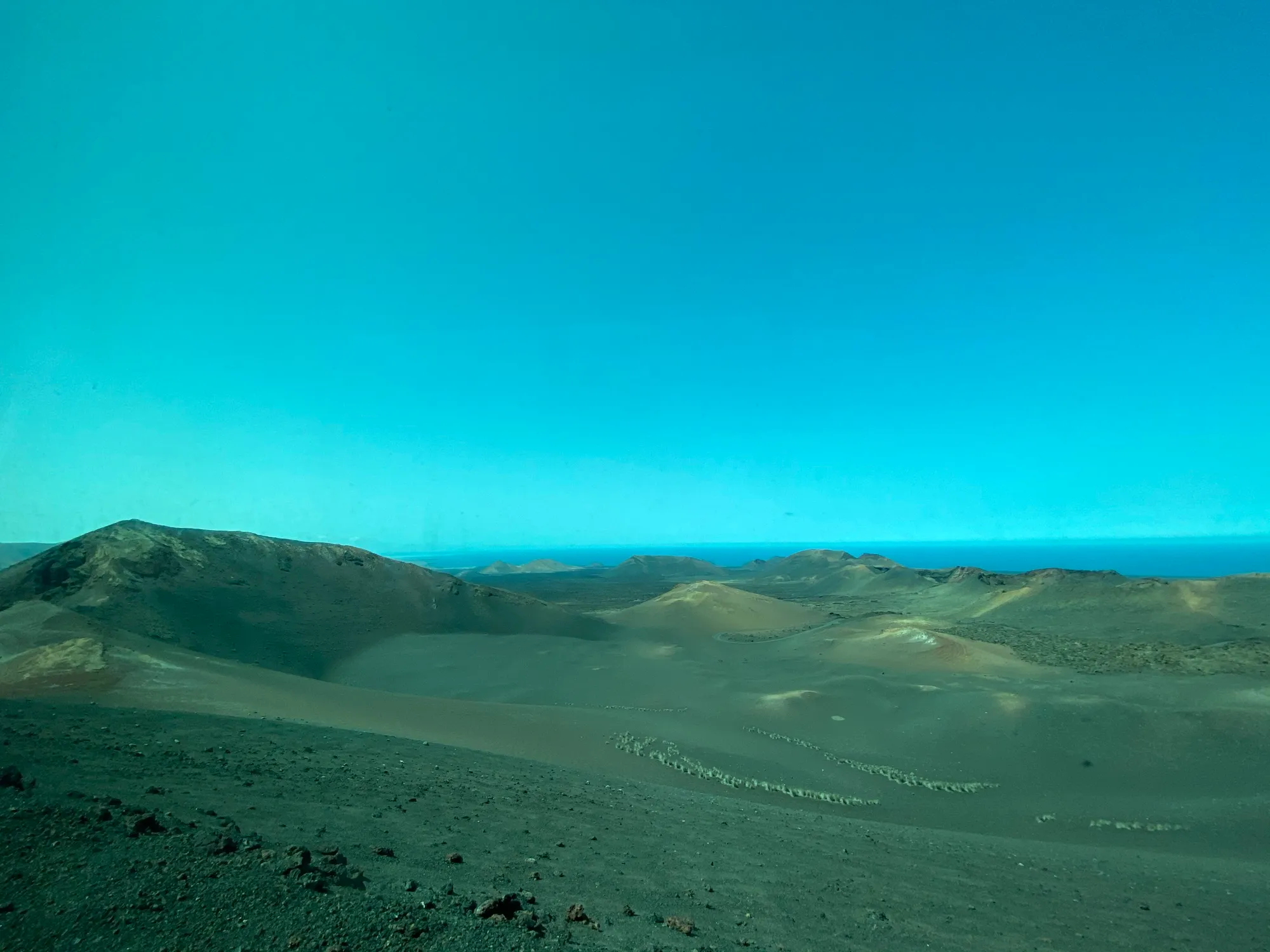
That “Volcanic” surname isn’t for show either. It’s Lanzarote’s flagship grape: nearly 70% of everything planted on the island, though it also crops up, in smaller amounts, on Tenerife and Gran Canaria. It shrugs off drought, clings to the picón (volcanic gravel) like few others, and because the Canaries never met phylloxera, many of these vines are ungrafted, on their own original roots, and seriously old. A rustic, hardy grape of place that found its perfect home in the ash of Timanfaya.
How Volcanic Malvasía tastes
How does it taste? Of salt, white flowers and something mineral, over a citrus base and a firm acidity that holds the wine up even when it’s dry and you’re sitting in thirty-degree heat. That’s the portrait of a good one: genuinely saline (you can taste the Atlantic), floral without being cloying, with a stony edge lent by the picón it grows on.
Most of them are dry, and that’s where it shines for me: fresh, long, with no oak dressing it up and no fireworks. Effortless elegance, like it isn’t even trying. But there’s more to the grape than that: there are off-dry versions, sweet wines from late-picked fruit (direct heirs to its old fame) and even traditional-method sparklers well worth grabbing.
From malmsey to dry: the grape that won Shakespeare over
Through the 16th and 17th centuries, Canary Malvasía was one of the most sought-after wines in Europe, and it was sweet. It shipped in bulk to England as Canary sack or malmsey, survived long sea voyages without spoiling, and worked its way into literature: Shakespeare put it in his characters’ mouths more than once (Falstaff drinks sack by the gallon, and Henry IV calls canary “a marvellous searching wine”). Canary wine, centuries before there was a label for it.
That glorious malmsey was sweet, and today’s Volcanic Malvasía is mostly dry: same family, different era, different way of drinking it. Volcanic Malvasía is the dry-made heir of that lineage, the one that survived and reinvented itself on the ash. So next time you open a dry, chilled one, you know the drill: you’re drinking the sober grandchild of a wine that half of Europe fell for.
Why does Lanzarote Malvasía taste different?
Because the same grape grows on other islands, but only in Lanzarote do you get all of it at once: the volcanic picón the vine grows in, the salinity of an Atlantic wind that never lets up, and old ungrafted vines that never went through phylloxera. The picón works like a sponge (it traps the night dew brought by the trade winds and feeds it slowly to the root), the vine struggles without irrigation and concentrates, and the grape’s natural acidity keeps the whole thing standing.
It’s not marketing: that exact combination happens nowhere else, which is why Lanzarote Malvasía carries a stamp you won’t find on any other island. If you want the landscape in detail (the pits, the zocos, the ash), there’s all of Lanzarote to explore. Here, hold on to the essentials: the wine tastes of the place, and in Lanzarote that place is like nowhere else.
Where to start: seven wineries to get you in
Every winery in Lanzarote works with Volcanic Malvasía, so it’s hard to go wrong. But if you want names so you’re not flying blind, these seven won’t let you down:
- El Grifo — The oldest in the Canaries (founded 1775) and one of the oldest still standing in all of Spain. Their dry Malvasía is the classic way in. They even have a museum, with the original press.
- Los Bermejos — A total benchmark. Their dry Malvasía is textbook, and they make a brut nature sparkler, 100% Volcanic Malvasía by the traditional method, that’s very much worth it.
- Bodega Stratvs — Born in 2008 at the foot of Timanfaya, right in the heart of La Geria. Their dry Volcanic Malvasía white is their best-known wine, and the place itself is a sight to visit.
- Bodegas Rubicón — A family winery inside the historic Cortijo de La Geria (a 16th-century manor house), revived in 1979. Textbook Volcanic Malvasía and Listán Negro, with proper wine tourism.
- Titerok-Akaet — The ones reviving old vineyards up in Haría. AKAET for the whites, all organic and with very little sulphur. Wine with a name and a face.
- Casa Althay (Volcán del Sol) — Small, family-run, tucked into the valley. The kind of place that pours you a sparkler disgorged that very morning. A treat to catch it like that.
- Cohombrillo — A tiny family project, vines up to two hundred years old on their own roots, natural and made in minute quantities. If you find it, grab it without a second thought.
When we review specific bottles we’ll link them here so you can go straight to them. Meanwhile you know the score: if you spot a Volcanic Malvasía out there, don’t hesitate.
I don’t have one afternoon to point to with this grape, and that’s exactly why I stand up for it. You don’t need the epic scene or the volcano in the background: it’s the white you open on an ordinary Tuesday and it sorts your evening out. A wine that tastes of somewhere and doesn’t cost the earth is, to me, the hardest thing to find. And this one pulls it off like it’s no big deal.