Monopole Blanco Seco Reserva 2021: the CVNE Viura that laughs in your face
Comes across all light and breezy, then laughs in your face by the second glass. A Rioja Viura aged under flor, with a splash of Manzanilla and a century of history behind it.
A few days back we opened a Monopole Blanco Seco Reserva 2021, CVNE’s barrel-aged white. I ordered it on autopilot, fully expecting it to be great. It still caught me off guard.
Because this wine has a trick up its sleeve: it comes across all light and breezy, and a second later it laughs in your face, with a heft, a depth of flavour and a texture you simply don’t see coming.
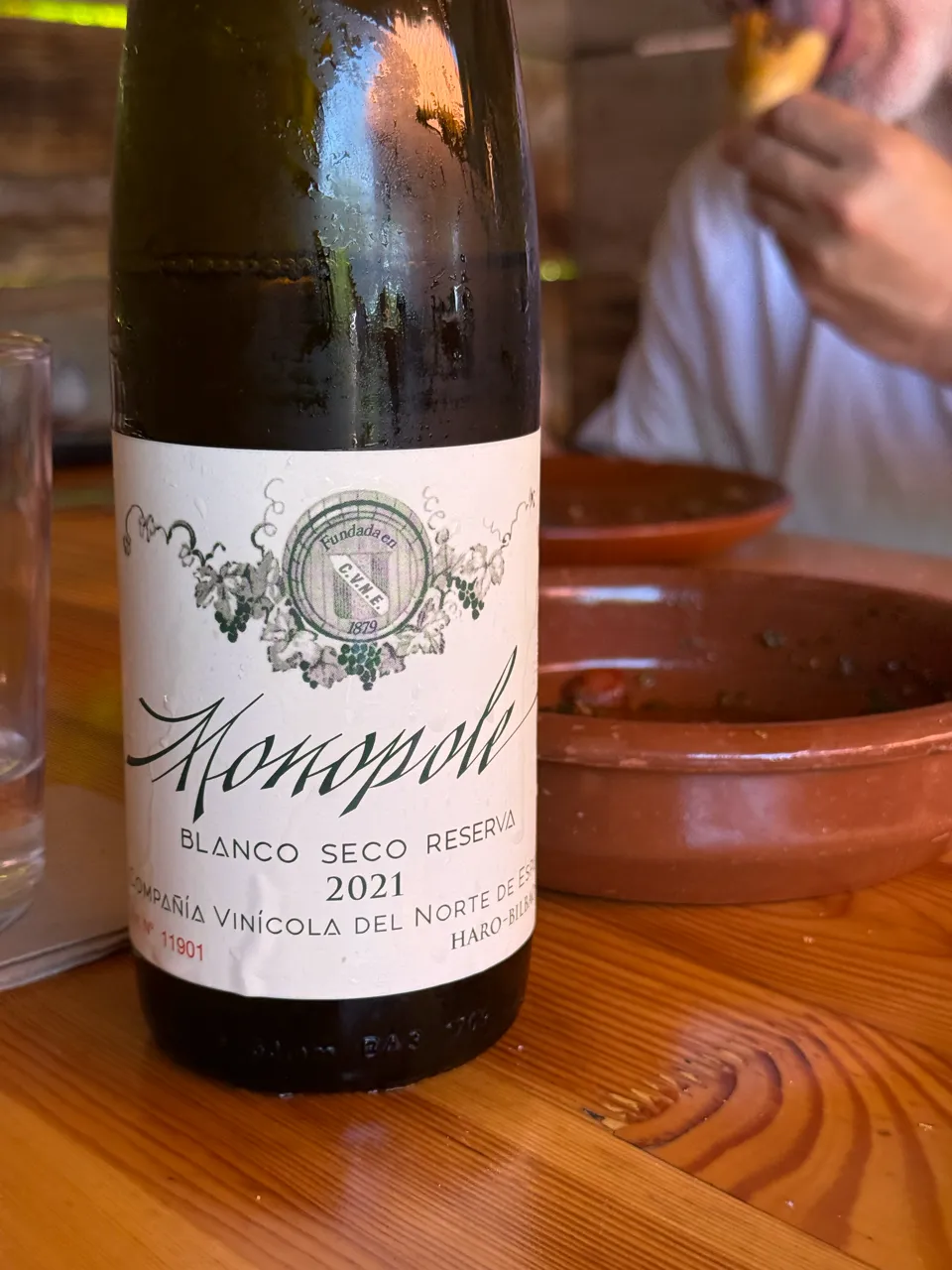
A hundred years and a single bottle from 1979
Monopole is Spain’s oldest white wine brand, registered back in 1915. For much of the twentieth century it was made the old way: Viura raised in wood with a splash of Manzanilla from Sanlúcar. Yes, sherry in a Rioja. Somewhere along the line the recipe fell by the wayside and Monopole turned into yet another young white, all steel and fruit.
Then, with the centenary on the horizon, someone at CVNE fancied tasting the original again. They went digging through the cellar for bottles of the old style and turned up exactly one, a 1979. They pulled the cork, found it alive and kicking, and decided the story couldn’t be left there.
To bring it back they talked Ezequiel García out of retirement, the house winemaker from the forties through to the seventies, who came back to show them how it used to be done (and wrote the whole process down before he passed away in 2017). The result is this Clásico Reserva: Viura from an estate vineyard in Villalba de Rioja, chalky soils above 600 metres, around 8 months in old barrels under a veil of flor, plus that dash of Manzanilla from Bodegas Hidalgo. A white Rioja quite unlike any other white Rioja.
The tasting: light on its feet, until it isn’t
The nose is white fruit, almond, lemon and vanilla, over a beeswax undertone I can’t stop thinking about. That almond and that wax don’t come from the grape: that’s the flor and the Manzanilla doing their thing. The winery mentions chamomile on the nose too, which in Spanish shares a name with the sherry (“manzanilla”), so with this glass you genuinely can’t tell which of the two you’re smelling.
On the palate it’s fresh and zippy, easy drinking at first. Then the trap springs: an almost waxy heft creeps in, a richness you’d never expect from something that slips down so easily. The finish is long and mineral, the sort that hangs around well after the glass is empty.
What to drink it with?
Fatty meats. Yes, a white for meat: the acidity slices through the fat and the body takes the hit without flinching. Ibérico pork, ribs, a proper Sunday roast. It’ll happily handle fish in sauce and aged cheese too, but it does its best work exactly where an ordinary white would throw in the towel.
I ordered it on autopilot. Next time it’ll be on purpose.
Into whites with real body? You can't go wrong here.