What wine to drink with cheese (really, not the cliché)
The "cheese means red" reflex is nearly always bad advice. Why tannin clashes, what actually pairs, and an honest guide to wine and cheese without the dogma.
25 July 2026
For years, every time I put out a cheese board I’d open a red without thinking. Everyone does it, “wine and cheese” sounds like red, and I never questioned it. Until one day I actually paid attention and realised most of those pairings didn’t work: the wine turned metallic, the more delicate cheese vanished, and I’d spent half my life believing a cliché.
The good news is that cheese is one of the most rewarding things to pair, the moment you stop parroting the slogan. Here’s what I learned, no dogma and no fuss.
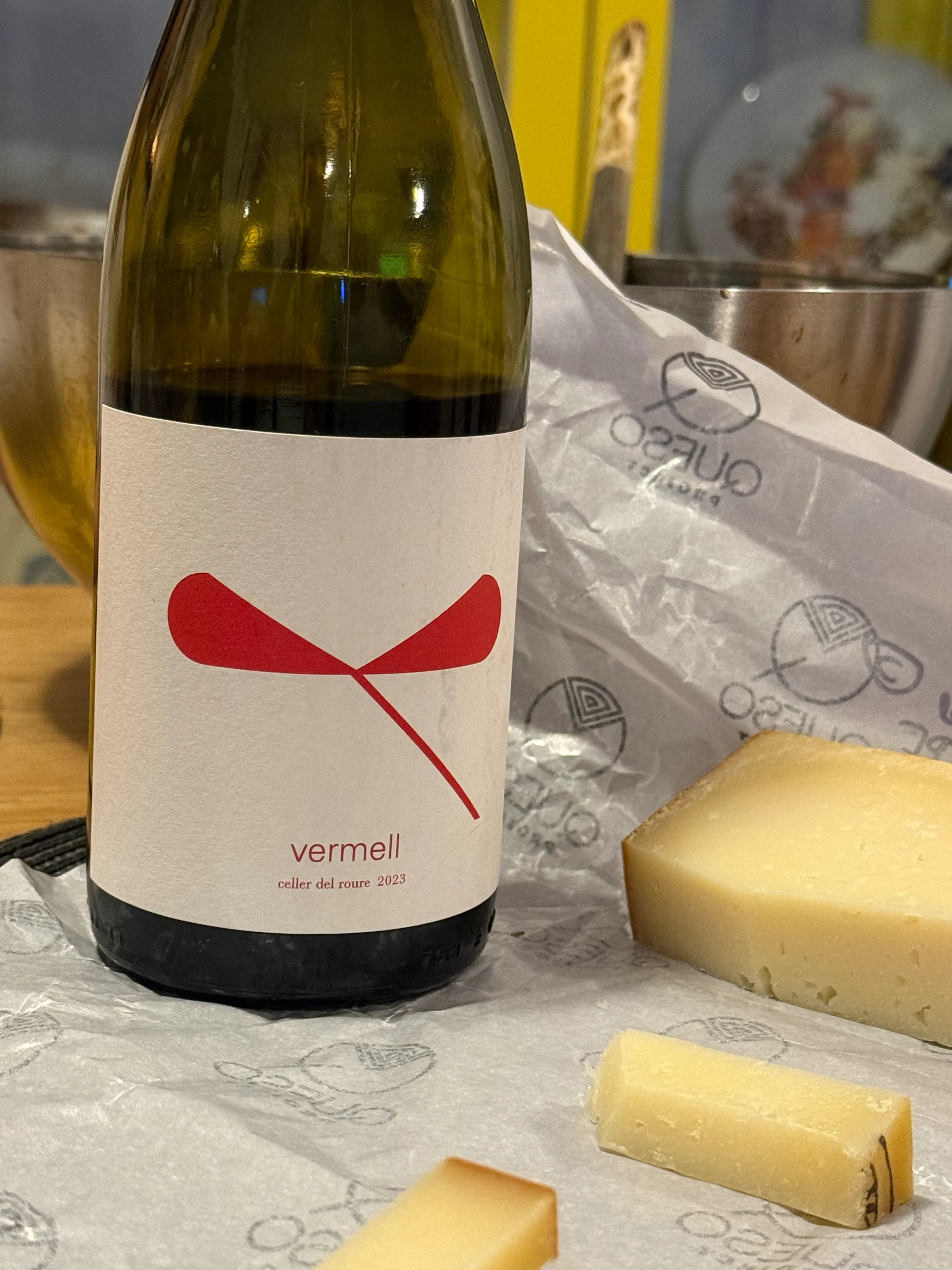
Does red wine go with cheese?
As a general rule, no. That’s the cliché to retire. The culprit is tannin: it reacts with casein (the milk protein) and leaves that bitter, metallic feel in your mouth, on top of burying the cheese’s finer flavours. That’s why a bold red flattens a delicate cheese instead of accompanying it.
A tannic red works with very few cheeses (aged and hard ones, not much more). White, on the other hand, has far less tannin and an acidity that cuts the fat and cleans the palate: some sommeliers reckon white pairs well with 90% of cheeses. It’s not that red is banned, it’s that it’s almost never the best call. And yet it’s the first thing we all reach for.
The rule that actually works: acidity, sweetness and bubbles
Forget the colour and hold on to three weapons. Acidity: it cuts the fat and refreshes, which is why fresh whites do so well. Sweetness: the sweet-salty contrast is one of the most complete pairings there is (think of a blue with something sweet beside it). Bubbles: sparkling scrubs the fat and resets your mouth between bites.
With those three ideas you don’t need a spreadsheet. The other half-rule is to match intensity: mild cheese, gentle wine; monster cheese, wine with character. A powerful cheese makes short work of a timid wine, and vice versa.
What wine with which cheese
- Fresh and goat’s cheeses (mozzarella, young goat) → a sharp, acidic white. The textbook classic is a Loire Sauvignon Blanc with goat’s cheese, but any saline white like Albariño does the job nicely.
- Soft white-rind cheeses (Brie, Camembert) → bubbles. A Champagne or any dry sparkler: the acidity and the fizz cut through that buttery centre like a knife.
- Semi-cured (medium-aged, tetilla, young gouda) → plenty of room here: a white with some body or, if you fancy a red, a light, fresh one. A carbonic Listán Negro served chilled is one of the few reds that gets on with almost anything.
- Aged and hard (aged Manchego, Comté, parmesan) → the ground where red finally shines, with some years behind it. But try a fortified wine too (a fino or an amontillado): the combination is out of this world.
- Blues (Roquefort, Cabrales, Stilton) → sweet, no question. The sharp salt of a blue is balanced by the sugar of a sweet wine. It’s the most spectacular pairing on the whole board.
The textbook pairings (that genuinely work)
If you want a safe bet, these have been proven for centuries and don’t miss:
- Sauternes with Roquefort — the king of sweet-and-salty. A noble sweet wine from Bordeaux against France’s most famous blue.
- Port with Stilton — the British version of the same idea, and a Christmas institution.
- Champagne with Brie — bubbles and acidity against cream. Pure luxury for almost no effort.
- Sancerre with goat’s cheese — Sauvignon Blanc and goat grew up together in the Loire. They seek each other out.
- Pedro Ximénez, or a good aged cheese — a sweet fortified or a fino with an old sheep’s cheese: try it and report back.
And if I just want to open what’s in the house?
Then open it, there’s no wine police here. This guide isn’t about sacred rules, it’s about understanding a couple of things so you get it right more often. In practice I pair with whatever’s to hand and don’t rule anything out: half the fun of a board is trying combinations and stumbling on the one that blows your mind.
That said, if you have to choose blind, play the odds: go for acidity over tannin, and when in doubt open a fresh white or something with bubbles before the usual red. And if it’s a blue, find something sweet come what may. With those three cards in your hand, a good cheese and a wine you like almost never end in disaster. The cliché, on the other hand, does.