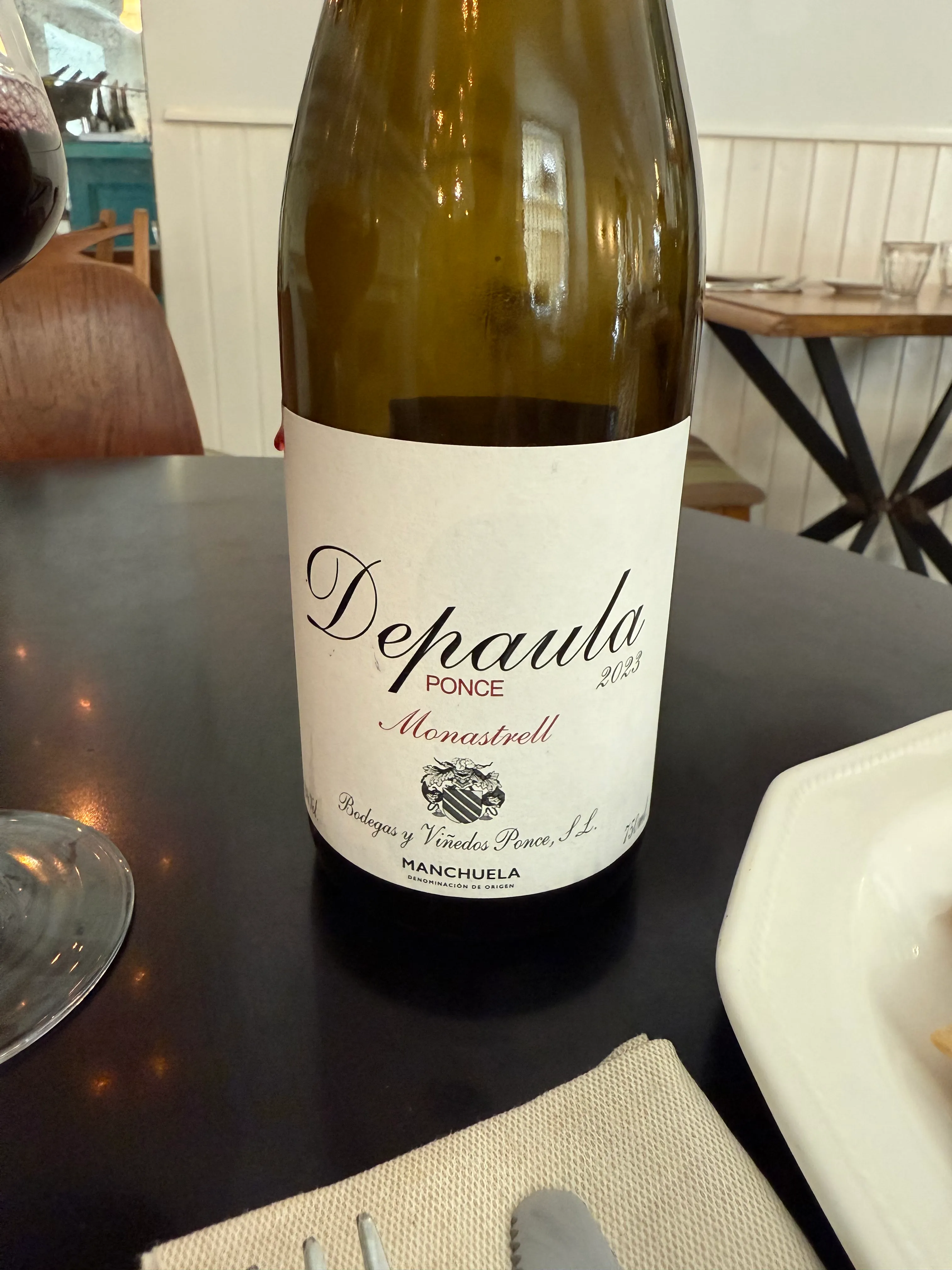
DePaula 2023: the Bodegas Ponce Monastrell that drinks itself
A Manchuela Monastrell that comes over bright, floral and peppery. Juan Antonio Ponce's easy-drinking red, from old vines and whole-cluster fermentation.
The other day we opened a DePaula 2023, the Monastrell from Bodegas Ponce (@bodegasponce). A wine I didn’t have on my radar, and it left me with that gormless grin you get when something surprises you out of nowhere.
Because Monastrell usually promises something else entirely. You brace for muscle, sun and dry-farmed tannin, the sort of red that leaves your mouth parched and your body heavy. This one does the opposite: bright, floral, light on its feet. It doesn’t ask permission, it just drinks itself.
Ponce, the man who put Manchuela on the map
Behind this bottle is Juan Antonio Ponce, who started his winery in 2005 aged 23, after cutting his teeth as Telmo Rodríguez’s right-hand man and a stint in France learning biodynamics. He went back to his native Manchuela (that plateau between Cuenca and Albacete that meant bulk wine for decades) fixed on making wine of place from the old local grapes. Bobal is his warhorse, but along the way he’s been rescuing others, and that’s where Monastrell comes in.
DePaula is his easy Monastrell, and “easy” doesn’t mean simple. It comes off old vines, plots of over-fifty-year-old plants on clay-limestone soils. It’s fermented whole-cluster with native yeast, sulphur kept to a minimum, and spends just a few months in big old barrels before being bottled unfiltered. It all pulls in the same direction: don’t smother the fruit, let the grape speak fresh. That floral, juicy lift you catch in the glass comes straight from there, from the whole clusters and from not drowning the wine in oak.
The tasting: floral where you braced for muscle
The nose is cherry and blueberry, red and black fruit just off the bush, with a floral backbone lifting it and that little kick of black pepper Monastrell gives you when it’s left alone. Bright is the word: it smells of living fruit, not jam.
The palate makes good on the nose. Intense but nimble, juicy fruit that fills the mouth without weighing it down and the pepper peeking out behind. No tannins to sandpaper your tongue: it’s an easy drink, the kind that’s gone before you clock you’re already on your third glass. Tasty and gluggable, without the solemnity reds sometimes get saddled with.
What to drink it with?
Almost anything, and better served cool. This is a weeknight red, a generous one, the sort that doesn’t demand a banquet to justify it. It’ll take a rice dish, some cured meat, grilled veg, a decent pizza. It handles semi-cured cheeses with ease, and if you serve it a touch below room temperature it’ll thank you for it. This isn’t a wine for cellaring and philosophising: it’s a wine for opening and enjoying. If you take to this league of reds that don’t weigh you down, the Andreas Bender Pinot Noir plays in it too, and Celler del Roure’s La Pebrella is what happens when that league goes up a rung.
I opened it out of curiosity. I finished it wanting another bottle.
Tasty, easy and no fuss. The kind that vanishes from the glass before you notice.